
Life on Pause: How War Freezes Personal Futures
- Pages: 6
- Word count: 1359
- Category: War
A limited time offer! Get a custom sample essay written according to your requirements urgent 3h delivery guaranteed
Order NowWar is most often described through political decisions, front lines, and military losses. Yet behind these abstract categories lies a less visible but no less destructive consequence: the suspension of human lives. For millions of people, war means not only a constant threat to safety but also a prolonged state of pause in which education, careers, and personal plans are postponed indefinitely. Understanding this effect is essential if we are to see war not only as a geopolitical event, but as a profound social rupture that reshapes individual destinies.
War as a Break in Life Trajectories
In peacetime, most people’s lives unfold according to a relatively predictable logic. Education leads to a profession, work to financial stability, and personal relationships to long-term plans. War destroys this sequence, severing the links between past, present, and future.
Historically, such ruptures have accompanied every major conflict of the twentieth and twenty-first centuries. Young people caught in combat zones or forced to flee often lost years of formal education. Diplomas became devalued, universities closed or became inaccessible, and skills that were meant to form the foundation of a career suddenly proved irrelevant. The continuity that allows individuals to build on previous efforts was broken.
The cause-and-effect relationship here is direct: war deprives people of the ability to plan. When basic needs—safety, housing, food—are under constant threat, long-term goals inevitably recede into the background. As a result, life trajectories do not merely slow down; they are abruptly interrupted, leaving behind a pervasive sense of lost time.
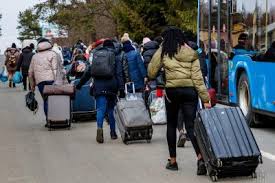
This rupture also affects identity. In stable conditions, people define themselves through roles—student, professional, parent, partner. War destabilizes these roles, replacing them with temporary and often unwanted identities such as refugee, internally displaced person, or survivor. These labels, though necessary in humanitarian contexts, further reinforce the feeling that life has been put on hold.
 Lost Years of Education and Professional Development
One of the most vulnerable spheres during war is education. School and university closures, the destruction of infrastructure, and forced migration create generations with fragmented or interrupted learning paths. Even when online formats are available, access is often limited by technical constraints, unstable living conditions, or psychological stress.
For students, war means not only a break in studies but also the loss of an academic environment. Education is more than the transmission of knowledge; it involves social interaction, mentorship, and the gradual formation of professional identity. Without these elements, learning becomes formalized and less effective, reduced to the mechanical completion of tasks rather than meaningful intellectual growth.
Professional development is similarly frozen. People lose jobs, businesses collapse, and years of accumulated experience may no longer be relevant in new circumstances. Many are forced to accept unskilled labor or completely change fields, effectively starting from zero. This is not simply a matter of economic survival but a profound disruption of self-worth and long-term aspirations.
The social context intensifies the problem. In host countries, refugees’ diplomas and professional qualifications are often not recognized. This creates a paradoxical situation: individuals formally possess knowledge and skills, yet are effectively excluded from professional systems. The result is a structural form of inequality that persists long after active fighting ends.
Over time, these lost years compound. Delayed education leads to delayed entry into the labor market, lower lifetime earnings, and reduced social mobility. What begins as a temporary interruption becomes a long-term disadvantage that shapes entire life courses.
Personal Time and a Deferred Life
Beyond education and careers, war freezes personal life itself. Plans for starting a family, relocating, or investing in self-development are postponed or radically revised. Time begins to be perceived differently—not as a resource for growth, but as a period of waiting for the crisis to end.
Psychologically, this condition is often described as “living in waiting mode.” People avoid making long-term plans because the future feels too uncertain. This perception of time heightens anxiety and reinforces a sense of lost control over one’s own life. Days may be filled with activity, yet lack a sense of direction or progression.
It is important to note that “pause” does not mean inactivity. Many continue to work, study, or care for loved ones. However, these actions are frequently experienced as temporary and devoid of перспектив. The future becomes abstract, while the past turns into a painful reference point—a reminder of what life used to be and what it might have been.
Compared to peaceful contexts, the difference is striking. In stable conditions, even failures are often perceived as part of a larger journey. During war, the very idea of a coherent journey dissolves. Life becomes a series of forced reactions to external circumstances rather than a self-directed path.
This altered relationship with time can have lasting psychological consequences. When people spend years in a state of suspension, it becomes difficult to re-engage with long-term planning even after conditions improve. The habit of waiting replaces the habit of building.
Long-Term Social Consequences of “Frozen” Lives
The effects of frozen futures do not disappear with the end of war. Lost years of education and experience reverberate through economies, social mobility, and levels of trust within society. Entire generations may enter adulthood at a structural disadvantage, beginning their lives with significant delays compared to peers in stable regions.
From an economic perspective, this translates into reduced productivity and a shortage of qualified professionals. From a social standpoint, it can deepen inequality and fuel frustration, as people compare their interrupted lives with alternative paths they might have taken under different circumstances.
Culturally, war leaves behind a specific kind of memory—not only of suffering and loss, but of missed opportunities. People often speak less about what they lost materially than about who they could have become. This sense of unrealized potential becomes part of collective narratives, shaping how societies understand themselves after conflict.
At the same time, it is important to avoid an overly deterministic view. Some individuals do find new meanings, professions, and forms of self-realization precisely under crisis conditions. For a minority, disruption becomes a catalyst for transformation. However, these cases are exceptions rather than the rule and do not negate the systemic nature of the problem.
Effective recovery therefore requires more than material reconstruction. It involves restoring people’s sense of temporal perspective—the belief that the future is once again open to planning and agency. Educational programs, recognition of qualifications, and psychological support are crucial in this process. Without them, physical rebuilding risks leaving deeper social wounds unaddressed.
Key Takeaways
-
War freezes life trajectories by breaking the link between past efforts and future outcomes.
-
Lost years of education and careers produce long-term social and economic consequences.
-
Personal life during war often shifts into a prolonged state of waiting and uncertainty.
-
“Frozen time” affects not only individuals but entire generations.
-
Recovery requires addressing education, employment, and psychological well-being, not only physical reconstruction.
Conclusion
War affects human lives not only through destruction and loss, but through the suspension of time itself. “Life on pause” is a condition in which the future is deferred and the present loses stable reference points. Recognizing this dimension of war allows for a deeper understanding of its real consequences and serves as a reminder that post-conflict recovery is not only about rebuilding cities, but about restoring people’s ability to plan, grow, and live their lives forward again.