
Food as Cultural Identity in a Globalized World
- Pages: 4
- Word count: 982
- Category: Culture
A limited time offer! Get a custom sample essay written according to your requirements urgent 3h delivery guaranteed
Order NowFood has always been more than a means of satisfying physical hunger. It carries memories, traditions, and social meanings that connect individuals to families, communities, and entire nations. In a globalized world marked by migration, fast food chains, and cultural exchange, food remains one of the most resilient markers of cultural identity. Even as borders become more porous and cuisines intermingle, what people cook, eat, and share continues to express who they are and where they come from.
Why Food Is Such a Powerful Cultural Marker
Unlike language or clothing, food engages the senses directly and is embedded in daily routines. Meals are repeated rituals that reinforce belonging from childhood onward. Traditional dishes often accompany family celebrations, religious holidays, and life transitions, turning recipes into carriers of collective memory.
Historically, cuisine developed in close connection with geography, climate, and available resources. Local ingredients shaped cooking techniques, while social structures influenced who prepared food and how it was shared. Over time, these practices became symbols of regional and national identity. Even when people leave their place of origin, food is often the easiest tradition to preserve and transmit.
This explains why culinary traditions tend to survive longer than many other cultural forms. A migrant may adopt a new language or lifestyle, but continue to cook familiar dishes at home. Food provides continuity in situations of displacement and change, acting as a stabilizing force in uncertain environments.
Migration, Diasporas, and the Transformation of Cuisine
Migration does not freeze food traditions in time; it transforms them. When people move, they adapt recipes to new ingredients, local tastes, and economic conditions. As a result, diasporic cuisines often differ from their “original” versions, creating hybrid food cultures.
These adaptations reveal a key cause-and-effect relationship: cultural identity is not lost through change, but reshaped. For example, dishes created in migrant communities may later be embraced as authentic expressions of that culture, even influencing culinary trends in the country of origin. What begins as adaptation becomes innovation.
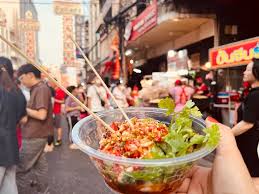
At the same time, food can serve as a bridge between cultures. Restaurants, street food, and home cooking introduce unfamiliar cuisines to wider audiences, fostering curiosity and informal cultural exchange. Sharing food becomes a low-barrier way to engage with difference, often more effective than abstract discussions about identity.
However, this process is not always symmetrical. Some cuisines gain global visibility and prestige, while others remain marginalized or stereotyped. Which foods are celebrated and which are ignored often reflects broader power dynamics in global culture.
Fast Food, Global Brands, and Local Resistance
Global fast food chains are often cited as symbols of cultural homogenization. Their standardized menus and business models prioritize efficiency and familiarity, sometimes at the expense of local food traditions. In many cities, identical restaurants appear regardless of cultural context, reinforcing fears of a “flattened” global culture.
Yet the relationship between fast food and local cuisine is more complex than simple replacement. In practice, global brands frequently adapt their menus to local tastes, incorporating regional flavors and ingredients. This localization strategy demonstrates that even globalized food systems cannot fully escape cultural specificity.
Moreover, the spread of fast food has prompted renewed interest in local and traditional cuisines. As industrialized food becomes more visible, movements focused on slow food, regional products, and culinary heritage gain momentum. In this sense, globalization can indirectly strengthen cultural identity by making its erosion more noticeable and politically relevant.
The coexistence of fast food and local cuisine illustrates an important dynamic: cultural identity is often asserted most strongly when it feels threatened. Food becomes a site of resistance, where choosing what to eat is also a statement about values, history, and belonging.
National Cuisine in a Global Context
The idea of a fixed “national cuisine” is itself a modern construct. Many dishes now considered traditional emerged through centuries of trade, colonization, and cultural exchange. Tomatoes in Italian cuisine or spices in European cooking are reminders that globalization is not a new phenomenon.
What has changed is the speed and scale of exchange. Today, recipes circulate instantly through social media, cooking shows, and digital platforms. This accelerates culinary fusion and challenges narrow definitions of authenticity. A dish may have countless variations, all claimed as legitimate expressions of a shared tradition.
Rather than weakening cultural identity, this fluidity highlights its adaptive nature. Food identity is not about preserving an untouched past, but about maintaining a recognizable core while allowing transformation. The persistence of certain flavors, cooking methods, and food rituals shows that identity can be flexible without becoming meaningless.
In this context, food functions as a living archive. It records historical encounters, power relations, and cultural negotiations, while remaining relevant to contemporary life.
Insights
-
Food is a daily practice that reinforces cultural identity through repetition and sensory experience.
-
Migration transforms cuisines without erasing their cultural significance.
-
Global fast food does not simply replace local food but interacts with it in complex ways.
-
Culinary traditions often gain strength when perceived as threatened by globalization.
-
National cuisines are historically shaped by exchange and adaptation, not isolation.
-
Food remains a powerful medium for expressing belonging in a globalized world.
Conclusion
In an era of intense cultural exchange, food continues to anchor identity in tangible, everyday practices. While globalization reshapes how cuisines are prepared, shared, and perceived, it does not eliminate their cultural meaning. Instead, food adapts, absorbs influences, and reasserts its role as a marker of belonging. By looking at what and how people eat, we gain insight into how cultures survive, transform, and remain meaningful in a rapidly changing world.