
Myths About Hydration and the Body’s Real Water Needs
- Pages: 4
- Word count: 977
- Category: Health
A limited time offer! Get a custom sample essay written according to your requirements urgent 3h delivery guaranteed
Order NowWater is one of the most discussed—and at the same time most misunderstood—elements of a healthy lifestyle. Advice on how much to drink, when to drink, and which water to choose often contradicts itself and is frequently presented as universal truth. This topic matters to anyone who cares about health, physical endurance, and mental performance but wants to rely on understanding how the body actually works rather than on popular slogans.
Where the Myths About “Proper” Hydration Come From
Most modern ideas about hydration did not originate in medical offices but in popular culture. The belief that a person must drink a strictly defined amount of water every day gained popularity in the second half of the twentieth century. This coincided with the rise of the bottled water industry, fitness culture, and a general tendency to simplify complex physiological processes into easy-to-follow rules.
Historically, people did not measure water intake in glasses or liters. They relied on thirst, water availability, climate, and physical activity. In agricultural and nomadic cultures, the idea of “dehydration” as a constant everyday threat did not exist—the human body adapted to environmental conditions.
Modern myths often grow out of partially correct scientific findings. For example, studies show that even mild dehydration can reduce concentration and cognitive performance. From this, a simplified conclusion is drawn: one should drink constantly and “just in case.” As a result, a nuanced recommendation turns into a rigid dogma that ignores individual differences.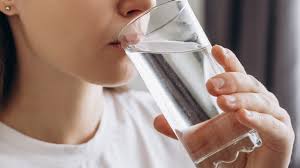
How Much Water the Body Actually Needs
One of the most common myths is the rule of “eight glasses a day” or “two liters of water daily.” The problem is that this rule has no universal scientific basis. Water needs depend on many factors: body weight, level of physical activity, ambient temperature, diet, health status, and even genetics.
The body does not get water only from drinks. A significant portion comes from food—vegetables, fruits, soups, and grains. In addition, so-called endogenous water is produced during metabolic processes. This means that two people who drink the same amount of liquid may be in very different states of hydration.
The thirst mechanism itself is a complex regulatory system involving hormones, the kidneys, and the nervous system. In healthy individuals, the sensation of thirst usually appears before dehydration becomes dangerous. Ignoring thirst is unwise, but forcing oneself to drink without feeling thirsty is not always necessary.
Interestingly, excessive water consumption can also be harmful. In rare cases, it can lead to hyponatremia—a condition in which sodium levels in the blood drop due to excess fluid. This once again shows that the principle “the more, the better” does not apply to hydration.
Water, Coffee, Tea, and Other Drinks: What Counts as Hydration
Another persistent myth is the belief that only plain water “counts,” while tea, coffee, or soups supposedly dehydrate the body. This view is largely linked to the fact that caffeine has a mild diuretic effect. However, modern research shows that for people who regularly consume coffee or tea, this effect is minimal and does not lead to net fluid loss.
Tea, coffee, milk, herbal infusions, and even some juices contribute to overall hydration. Of course, drinks high in sugar or alcohol have their own limitations, but these are related more to other aspects of health than to direct dehydration.
Dietary culture also plays a role. In countries where soups and liquid-based meals are common, people receive a significant amount of water through food, even if they drink less. By contrast, the popularity of dry snacks and ultra-processed foods may increase fluid needs, as these products contain very little water.
Context is crucial. Athletes, people working in hot environments, or those who are ill do require closer attention to hydration. But applying these recommendations universally to everyone is a mistake.
How to Tell If Your Body Is Getting Enough Water
Instead of rigid norms, it is more useful to pay attention to bodily signals and simple objective indicators. One of the easiest indicators is urine color. In a healthy person, it is usually pale yellow. Darker urine may indicate insufficient fluid intake, while completely clear urine can signal excess.
Overall well-being also matters. Fatigue, headaches, and reduced concentration may be linked to mild dehydration, but it is important to consider other factors as well—sleep, nutrition, and stress. Water is not a universal solution to every problem.
Age also affects thirst perception. In older adults, the thirst mechanism may become less precise, requiring a more conscious approach to hydration. In children, thirst often appears more quickly due to differences in metabolism.
The modern scientific approach to hydration is not about following universal numbers but about understanding individual needs. This is especially important in an era when health is increasingly viewed as an interconnected system rather than a set of isolated rules.
Key Takeaways
-
There is no universal daily water requirement—needs are individual.
-
The body gets water not only from drinks but also from food and metabolic processes.
-
Tea and coffee do not dehydrate most people.
-
Thirst is a reliable regulatory mechanism in healthy individuals.
-
Excessive water intake can be just as harmful as insufficient intake.
-
Urine color is a simple and accessible hydration indicator.
Conclusion
Hydration myths arise when complex biological processes are reduced to overly simple formulas. In reality, water needs depend on many factors and vary from person to person. A mindful approach to hydration means listening to your body, considering your lifestyle, and avoiding blind adherence to popular rules. This perspective supports health without unnecessary stress or extremes.