
Language Evolution in the Age of Memes and Social Media
- Pages: 5
- Word count: 1242
- Category: Culture
A limited time offer! Get a custom sample essay written according to your requirements urgent 3h delivery guaranteed
Order NowIn today’s world, technology has radically transformed how we communicate. Social media platforms, short video trends, and meme culture create new forms of language, establishing new norms and blurring the lines between formal and informal speech. The influence of these processes extends beyond the digital realm, affecting written and spoken communication, shaping education, media, and even political discourse. Understanding how memes and online trends impact language is essential for linguists, educators, and the wider audience who encounter these new forms of communication daily.
Language is not a static system. It evolves alongside society, reflecting cultural, social, and technological changes. Memes and social media create conditions for accelerated linguistic evolution, where new words and expressions emerge, spread, and disappear within weeks or even days. Analyzing these processes helps us understand the mechanisms behind the transformation of language today and the implications this has for communication and information processing.
Memes as Linguistic and Cultural Phenomena
 Memes are not just pictures with captions or short video clips. They are complete cultural units that convey information, emotions, and social meanings in a compact and easily reproducible form. Memes have unique linguistic features: abbreviations, distortions of words, neologisms, and playful grammar. They serve multiple functions simultaneously: entertaining, educating, commenting on social and political events, and shaping collective identities.
A clear example can be found in the use of words and phrases originating on the internet, such as “flex,” “crush,” “shipping,” or “lolkek.” These words initially existed in limited digital environments but soon permeated everyday speech, especially among young people, and even found their way into the media. Memes create a language that is convenient for quick communication and emotional expression, but it can be difficult to understand for those outside a specific cultural context. This highlights the importance of contextual knowledge and media literacy: understanding the meaning of memes means understanding the cultural codes of a particular group.
Memes and Linguistic Economy
One of the key aspects of meme culture is the principle of linguistic economy. In the context of limited time for content consumption and the need for quick interaction, memes condense information to the minimum, leaving only emotional or cultural meaning. For example, the combination of an image and a short phrase can convey a complex social commentary without a lengthy explanation. This process resembles historical language phenomena where words were simplified in spoken language for communication convenience, but it happens much faster in the digital environment.
Social Media and New Norms of Language
Platforms like TikTok, Instagram, Twitter, and VK are creating their own linguistic environments. The nature of these platforms shapes communication norms: brevity, visuality, interactivity, and speed of response. People adapt their language to meet the demands of these spaces, using emojis, hashtags, GIFs, and video messages. These tools become part of language, expanding its expressive capabilities.
Emojis and Visual Grammar
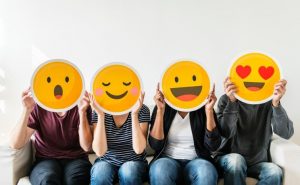
Emojis are an example of how visual elements integrate into written communication. A single symbol can convey an entire emotion or action, reducing the need for verbal explanation. Studies show that using emojis changes how text is perceived: it becomes emotionally rich and allows for the transmission of intonation that regular words often lose. This also affects grammar: the sequence of emojis can create a “visual sentence” with its own structure, forming a new level of linguistic interpretation.
Abbreviations and New Forms of Words
Social media platforms stimulate the emergence of abbreviations and new forms of words. Acronyms like “OMG,” “LOL,” “BRB,” or “NFS” spread rapidly among young people and become part of everyday speech. These forms often emerge based on phonetic or graphic economy: the number of symbols is reduced, but recognizability and emotional coloring are preserved. This process can be compared to historical language trends when words were simplified in spoken language for convenience.
Cause-and-Effect Relationships and Cultural Consequences
The impact of memes and social media on language cannot be viewed in isolation: it is connected to the changing cultural and social context. The rapid exchange of information, the global integration of communication platforms, and the reduction of barriers between written and spoken language create new dynamics for language.
Acceleration of Language Evolution
In the past, new words and grammatical forms spread over decades or even centuries. In the digital age, this process has accelerated: a word or expression can become popular within a few days and fade away within a week. This phenomenon emphasizes the adaptability of language but also creates challenges for standardization and formal education. For example, students and young professionals might use meme language in academic and formal communication, requiring educators to be flexible and understand the contemporary cultural codes.
Influence on Intergenerational Communication
Online language often becomes a barrier between generations. Young people quickly adopt meme culture and new forms of communication, while older generations may not understand the contexts and meanings. This affects social interaction, creating “language subcultures,” where understanding memes becomes a marker of group membership. Such phenomena can be compared to dialects and jargons that historically formed within specific communities.
Politics and Informational Influence
Memes and social media also transform political discourse. Short visual messages and slogans allow ideas to spread quickly, but often oversimplify complex concepts. This creates risks of manipulating public opinion and forming cognitive biases. The influence of memes on the perception of political events shows that language becomes not just a medium of communication but a tool for cultural and social influence.
Table: Examples of Linguistic Changes in the Meme Age
| Linguistic Phenomenon | Example | Effect |
|---|---|---|
| New Words and Expressions | “Flex,” “Crush,” “Shipping” | Expanding vocabulary to reflect new social concepts |
| Abbreviations | “LOL,” “BRB,” “OMG” | Time and symbol economy, speeding up communication |
| Emojis and GIFs | 😊🔥💀 | Conveying emotions and context without words, forming visual grammar |
| Meme Phrases | “This is fine,” “Cookie from sorrow” | Cultural commentary, creating collective identity |
| Trend Influence | TikTok slang, challenges | Rapid dissemination of linguistic innovations, cementing them in speech |
Key Takeaways
-
Memes and social media accelerate language evolution, creating new words, abbreviations, and visual elements.
-
The language of memes is convenient for fast communication but may be difficult to understand for those outside the digital subculture.
-
Memes have an impact beyond entertainment: they shape political, cultural, and social discourse.
-
Online language creates new cultural codes and subcultures, affecting intergenerational communication.
Conclusion
Memes and social media are transforming language, creating unique forms of communication, accelerating the emergence of new words and expressions, and changing how we convey information. These processes reflect not only the technological capabilities of the digital age but also cultural changes that shape new norms of communication. Understanding these trends is important for educators, linguists, and anyone interacting with modern forms of language. Language is becoming more dynamic, adaptive, and visually rich, opening new horizons for communication, but also raising questions about the preservation of a common cultural and educational context.