
Cancel Culture: Accountability or a Modern Form of Social Censorship?
- Pages: 5
- Word count: 1180
- Category: Culture
A limited time offer! Get a custom sample essay written according to your requirements urgent 3h delivery guaranteed
Order NowCancel culture has become one of the most widely discussed cultural phenomena of recent years. It manifests actively across social media, news outlets, academic spaces, and the entertainment industry, shaping reputations, careers, and public debates. For some, cancel culture represents a tool of social accountability and a way to draw attention to injustice; for others, it is a form of digital censorship and collective punishment that allows no room for mistakes. Understanding the nature of this phenomenon is essential for anyone engaged in public communication and cultural discourse.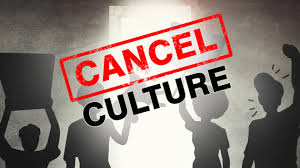
Cultural and Historical Roots of Cancel Culture
Despite its apparent novelty, cancel culture did not emerge in a vacuum. Historically, societies have always employed mechanisms of public condemnation: boycotts, exile, reputational sanctions. In traditional communities, violating moral norms could result in loss of status or exclusion from the group. The difference today lies in scale and speed. Digital environments have transformed these processes into global and instantaneous reactions.
Modern cancel culture developed at the intersection of several factors. First, the rise of social media has turned every user into both a consumer and a distributor of information. Second, increased attention to issues of discrimination, inequality, and abuse of power has created a demand for accountability where institutional responses were often lacking. In many cases, “canceling” becomes a reaction to real problems that were ignored for years.
Cultural context plays a decisive role. In Western societies, cancel culture is often linked to ideas of social justice and activism. In other regions, it is perceived as an imported phenomenon that creates tension between traditional values and global digital culture. Cancel culture, therefore, is not a universal mechanism but a product of specific social conditions.
It is important to note that the concept of public accountability itself is not inherently negative. Societies have the right to criticize public figures and demand explanations. The problem arises when criticism turns into total rejection of a person, leaving no space for dialogue or change.
Cancel Culture as a Mechanism of Social Accountability
Supporters of cancel culture view it as an alternative to ineffective institutional mechanisms. When courts, corporations, or educational institutions fail to respond to wrongdoing, public pressure becomes a way to pursue justice. Many such cases involve harassment, racism, or abuse of power.
From a cause-and-effect perspective, cancel culture can function as a signaling system. Public condemnation communicates which behaviors are no longer socially acceptable. This is particularly important during periods of cultural transition, when old norms no longer work and new ones are still forming. In this sense, “canceling” can contribute to behavioral change and the redefinition of standards.
Cancel culture also amplifies the voices of those previously excluded from public discourse. Social media enables marginalized groups to organize and draw attention to issues that were once silenced. Here, cancel culture operates not as destruction but as a form of collective protection.
Yet even within this framework, proportionality remains a critical issue. Not every misguided comment or poorly worded joke is equivalent to systemic harm. When all violations are treated as grounds for complete “cancellation,” the mechanism of accountability loses precision and credibility.
Thus, cancel culture can serve as a form of social regulation, but only when it is accompanied by discussion, context, and the possibility of behavioral change rather than punishment alone.
From Accountability to Censorship: Where Is the Line?
Critics of cancel culture point to its tendency to oversimplify complex situations. Social media platforms encourage binary thinking: guilty or innocent, ally or enemy. In such environments, nuance, context, and the evolution of beliefs are often ignored.
One of the core problems is the lack of procedural fairness. Unlike legal systems, cancel culture has no clear rules, timelines, or mechanisms for appeal. Decisions are collective, emotional, and often impulsive. This increases the risk of unjust outcomes, especially for individuals with less social or cultural capital.
From the perspective of free expression, cancel culture can foster an atmosphere of self-censorship. People begin to avoid difficult or unpopular topics out of fear of reputational damage. This is particularly problematic in academic and creative environments, where engagement with controversial ideas is essential for progress.
Another significant factor is irreversibility. Even when accusations are exaggerated or false, the digital footprint remains. Search engines, archives, and social platforms preserve scandals, while corrections or apologies rarely receive comparable attention. As a result, cancel culture can function as a form of long-term punishment.
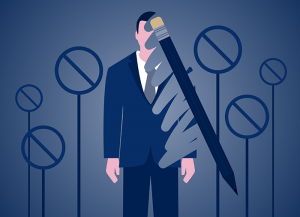
The boundary between accountability and censorship is crossed when dialogue, context, and the possibility of restoration disappear. When the goal shifts from changing behavior to symbolically destroying a reputation, cancel culture begins to perform a censorial role.
Social Consequences and Possible Alternatives
Cancel culture affects not only individuals but also broader social dynamics. It contributes to polarization, dividing societies into opposing camps and narrowing the space for nuanced discussion. Instead of addressing systemic problems, public attention often shifts toward personal scandals.
At the same time, completely rejecting cancel culture is not a productive solution. The issues it highlights are real and cannot be ignored. The key question concerns the form of response. Increasingly, alternative approaches based on restorative justice are being discussed.
Such approaches emphasize acknowledging harm, facilitating dialogue between parties, and working toward behavioral change rather than focusing solely on punishment. Although they require more time and effort, they offer greater potential for sustainable transformation. In cultural terms, this means moving from “canceling” toward accountability with opportunities for growth.
The role of media and platforms is also critical. Algorithms that reward outrage and virality amplify extreme reactions. More responsible moderation and editorial practices could reduce toxicity and create space for more thoughtful conversations.
Finally, individual responsibility matters. Participation in public condemnation requires awareness: understanding context, verifying information, and distinguishing systemic harm from isolated mistakes. Without this, cancel culture risks reflecting not justice, but collective impulsiveness.
Key Takeaways
-
Cancel culture has historical precedents, but digital environments have amplified its scale and speed.
-
In moderate forms, it can function as a mechanism of social accountability.
-
The absence of procedure and context can turn “canceling” into social censorship.
-
Cancel culture contributes to polarization and self-censorship.
-
The irreversibility of reputational damage remains a major concern.
-
Alternatives based on dialogue and restorative justice appear more sustainable.
Conclusion
Cancel culture reflects the tension between the pursuit of justice and the fear of social censorship. It emerged in response to real cultural and institutional failures, yet in its radical forms it risks reproducing new forms of injustice. The future of public dialogue depends on whether societies can maintain a balance between accountability and the possibility of error, growth, and change. It is within this balance that a mature cultural response truly takes shape.