
Global Supply Chains and Their Vulnerability to External Shocks
- Pages: 6
- Word count: 1329
- Category: Economics
A limited time offer! Get a custom sample essay written according to your requirements urgent 3h delivery guaranteed
Order NowOver the past several decades, global supply chains have become one of the defining structures of the world economy. They enable goods, components, and raw materials to move across borders with unprecedented speed and efficiency, linking producers and consumers on a global scale. From smartphones and automobiles to food and pharmaceuticals, modern life depends on intricate networks of suppliers, manufacturers, logistics providers, and distributors. Yet recent global disruptions have revealed a critical weakness: the same systems that deliver efficiency and cost reduction are often highly vulnerable to external shocks.
Crises such as pandemics, wars, trade conflicts, and climate-related disasters have exposed how fragile global supply chains can be when confronted with sudden disruptions. These events have demonstrated that supply chains are not merely technical or logistical systems but deeply embedded social, economic, and political structures. Understanding their vulnerabilities is therefore essential not only for economists and policymakers but also for businesses, workers, and consumers whose livelihoods and living standards depend on stable global flows of goods.
How Modern Global Supply Chains Took Shape
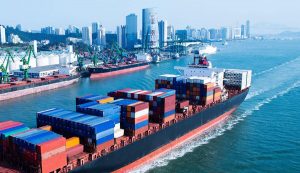 The emergence of modern global supply chains is closely tied to the broader process of globalization that accelerated in the second half of the twentieth century. Advances in transportation—especially container shipping—dramatically reduced the cost and complexity of moving goods across long distances. At the same time, improvements in communication technologies made it possible to coordinate production across multiple countries in real time. These developments coincided with trade liberalization policies that lowered tariffs and encouraged cross-border investment.
As a result, companies began to fragment production into discrete stages, locating each stage where it could be performed most efficiently. Labor-intensive processes moved to regions with lower wages, while design, research, and high-value assembly often remained in advanced economies. This global division of labor allowed firms to reduce costs, increase output, and compete more effectively in international markets.
The just-in-time production model became a cornerstone of this system. By minimizing inventories and synchronizing deliveries with production schedules, companies could free up capital and reduce storage costs. In stable conditions, this approach appeared highly rational and efficient. Over time, however, it also reduced buffers and redundancy, making supply chains increasingly sensitive to disruption.
Global supply chains also acquired geopolitical significance. Certain regions emerged as critical hubs for specific industries, such as East Asia for electronics manufacturing or the Middle East for energy supplies. Dependence on these hubs created hidden vulnerabilities. While efficiency gains were visible and measurable, the risks associated with concentration remained largely abstract until major disruptions occurred.
Crises and Pandemics as Stress Tests for Global Logistics
The COVID-19 pandemic represented one of the most severe stress tests global supply chains have faced in modern history. Unlike localized shocks, the pandemic disrupted production and transportation simultaneously across multiple regions. Factory closures, labor shortages, border restrictions, and sudden shifts in consumer demand combined to create cascading failures throughout global networks.
One of the most visible consequences was the breakdown of maritime logistics. Container shortages, port congestion, and skyrocketing freight rates highlighted how tightly coupled and inflexible shipping systems had become. Delays in one region quickly spread to others, disrupting delivery schedules and increasing costs for producers and consumers alike.
Industries reliant on highly specialized components were particularly affected. The global shortage of semiconductors offers a striking example. Because chip production is concentrated in a small number of facilities and requires long lead times, even minor disruptions had far-reaching effects. Automotive manufacturers were forced to halt production, while electronics producers struggled to meet demand. This “bottleneck effect” demonstrated how the failure of a single link can cripple entire industries.
Beyond economic costs, the pandemic revealed the social implications of supply chain vulnerability. Shortages of medical equipment, vaccines, and essential goods exposed deep inequalities between countries. Wealthier nations were able to secure supplies more quickly, while poorer regions faced prolonged shortages. In this sense, global supply chains not only transmitted economic shocks but also amplified existing global disparities.
Wars, Sanctions, and Geopolitical Fragmentation
While pandemics tend to be temporary, geopolitical shocks often produce longer-lasting structural changes. Wars and armed conflicts disrupt supply chains by damaging infrastructure, blocking transport routes, and increasing uncertainty. Insurance costs rise, shipping routes are rerouted, and companies face higher operational risks. These disruptions frequently persist even after active hostilities subside.
Economic sanctions introduce a different but equally significant set of challenges. By restricting access to markets, technologies, and financial systems, sanctions force firms to reorganize supply networks under severe constraints. Substituting sanctioned suppliers is often difficult, particularly in industries with high entry barriers or specialized production processes. As a result, companies may experience prolonged delays, rising costs, and reduced competitiveness.
These developments have contributed to a broader trend of geopolitical fragmentation. Governments increasingly view supply chains through the lens of national security rather than pure economic efficiency. Strategies such as reshoring, nearshoring, and friend-shoring aim to reduce dependence on politically sensitive regions by relocating production closer to home or to allied countries.
However, these strategies involve significant trade-offs. Moving production to higher-cost regions can increase prices and reduce efficiency. Moreover, complete self-sufficiency is rarely achievable in a highly interconnected global economy. Efforts to reduce vulnerability in one area may create new dependencies elsewhere, underscoring the complexity of managing global supply chains in an era of geopolitical tension.
Paths Toward Greater Supply Chain Resilience
In response to recent disruptions, both companies and governments have begun to rethink how supply chains are designed and managed. One of the most widely discussed strategies is diversification. By sourcing inputs from multiple regions and suppliers, firms can reduce reliance on any single point of failure. While diversification may increase short-term costs, it enhances long-term stability.
Digitalization has emerged as another critical tool for improving resilience. Advanced data analytics, artificial intelligence, and real-time monitoring systems allow companies to detect disruptions earlier and respond more effectively. Greater visibility across supply chains enables better risk assessment and more informed decision-making, transforming resilience into a strategic asset rather than a defensive measure.
Stockpiling and strategic reserves are also gaining renewed attention. Although maintaining inventories runs counter to the just-in-time philosophy, recent experience has highlighted the importance of having buffers during crises. The challenge lies in striking a balance between efficiency and preparedness, rather than pursuing either extreme.
Importantly, resilience is not solely a technical issue. It also depends on institutional coordination, international cooperation, and trust between actors. Fragmentation and unilateral actions may reduce certain risks but can also undermine the collective capacity to respond to global shocks. As supply chains continue to evolve, resilience will increasingly depend on aligning economic incentives with broader social and political considerations.
Key Takeaways
-
Global supply chains deliver efficiency and cost reduction but are inherently vulnerable to external shocks.
-
Pandemics and crises reveal hidden dependencies and amplify existing economic and social inequalities.
-
Wars, sanctions, and geopolitical tensions drive long-term restructuring rather than temporary disruption.
-
Building resilience requires diversification, digital tools, strategic buffers, and institutional coordination.
Conclusion
The vulnerability of global supply chains is not an accidental flaw but a structural consequence of how modern globalization has evolved. Decades of optimization for cost and speed have produced systems that function exceptionally well under stable conditions yet struggle under stress. Recent crises have made these weaknesses visible, forcing a reassessment of long-standing assumptions about efficiency and risk.
Looking ahead, the central challenge will be to redefine success in supply chain management. Rather than maximizing efficiency alone, businesses and governments must balance efficiency with adaptability and resilience. How this balance is struck will shape not only the future of global trade but also the capacity of societies to withstand and recover from the inevitable shocks of an uncertain world.