
Economic Implications of Artificial Intelligence and Automation
- Pages: 4
- Word count: 981
- Category: Economics
A limited time offer! Get a custom sample essay written according to your requirements urgent 3h delivery guaranteed
Order NowThe development of artificial intelligence (AI) and automation is becoming one of the key drivers transforming the global economy in the 21st century. These technologies are changing labor markets, increasing productivity, and creating new sources of income, while simultaneously exacerbating social and economic inequality.
This topic is important not only for economists and business leaders but also for governments, educational systems, and the general population. Understanding how AI and automation affect the economy allows us to anticipate labor market changes, develop effective policies, and mitigate potential risks.
 Impact of AI and Automation on the Labor Market
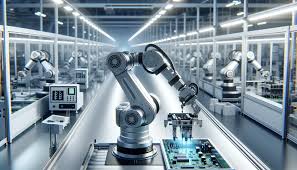
Automation and the implementation of AI are fundamentally changing employment. Robots, algorithms, and intelligent systems can perform routine tasks faster and more accurately than humans, leading to the reduction of certain jobs, especially in manufacturing and administrative sectors.
At the same time, these technologies create new types of employment. Professions emerge related to AI development, maintenance, oversight, as well as data processing, analytics, and cybersecurity.
The impact on the labor market is uneven: highly skilled specialists benefit from technological implementation, while low-skilled workers are at risk. This contributes to growing economic inequality both within countries and globally.
| Economic Sector | Effect of Automation | Examples of Job Changes |
|---|---|---|
| Manufacturing | High | Reduction of assembly line jobs; increase in robot operators and engineers |
| Administrative Sector | Medium | Replacement of routine paperwork with AI; growth of analytical roles |
| Education and Science | Medium | Increased demand for data specialists, analysts, educational platform developers |
| Service Sector | Low/Medium | Automation of customer service, chatbots; growth in creative and client-focused roles |
Thus, AI and automation create a complex balance: some jobs disappear, others are transformed, and new ones emerge based on technological advances.
Productivity Growth and Economic Effects
One of the most obvious advantages of AI and automation is increased productivity. Machines and algorithms work faster, more accurately, and for longer hours than humans, reducing costs and improving operational efficiency.
For example, automated factories can operate around the clock, and AI systems accelerate data processing and decision-making. This leads to higher company profits and business expansion.
However, the economic benefits of technology adoption are unevenly distributed. Large corporations with resources to implement advanced technologies benefit the most. Small and medium-sized enterprises face constraints due to high implementation costs and a lack of skilled personnel.
Increased productivity can also lead to lower prices for goods and services, which benefits consumers but simultaneously puts pressure on workers whose jobs become less in demand.
AI, Automation, and Economic Inequality
Economic inequality is one of the most pressing challenges associated with AI and automation. These technologies widen the gap between highly skilled specialists and low-skilled workers.
Highly skilled professionals enjoy higher salaries, access to new markets, and career development opportunities. Conversely, people performing routine tasks risk unemployment or moving to lower-paying positions.
Furthermore, AI adoption exacerbates global disparities. Countries with developed economies and access to advanced technologies gain advantages, while developing nations may lag behind, increasing economic gaps between regions.
To address these issues, governments need proactive measures: retraining programs, educational system reforms, and social safety nets for those who lose jobs due to automation.
| Challenge | Cause | Possible Solution |
|---|---|---|
| Rising unemployment | Replacement of routine jobs | Retraining programs, educational initiatives |
| Widening income gap | High salaries for IT specialists | Income regulation, taxation on automation |
| Inequality between nations | Access to technology and investment | International cooperation, technological aid |
| Shortage of skilled labor | Rapid growth in AI-related jobs | Expansion of STEM education, data analysis and programming courses |
Future Perspectives and Strategic Recommendations for Governments
In the long term, AI and automation will increasingly influence the economy and society. Governments need to consider several strategic directions:
- Human capital development. Educational programs must prepare specialists for the digital environment, including analytical skills, programming, and creative thinking.
- Regulation of technology implementation. It is necessary to balance incentives for businesses with social protection for workers. This could include tax benefits for companies creating new jobs or compensation for workers displaced by automation.
- International cooperation. AI and automation are global processes, so knowledge sharing, joint research, and safety standards are critically important.
- Social programs and population protection. Support systems should be established for the most vulnerable groups to prevent social tensions arising from technological transformation.
- Investment in research and infrastructure. Countries that actively invest in technology and create innovation infrastructure gain long-term economic advantages.
Key Takeaways
- AI and automation transform labor markets by creating new professions and reducing old ones.
- Productivity growth primarily benefits large companies but creates economic risks for workers and small businesses.
- Technologies amplify economic inequality both within countries and globally.
- Strategic government measures include education, regulation, social protection, and international cooperation.
Conclusion
Artificial intelligence and automation offer enormous opportunities for economic growth but also create significant social and labor challenges. The key lies in balancing technological progress with policies that protect workers and reduce inequality.